Application

What is agrivoltaics? How it works and which structures it needs

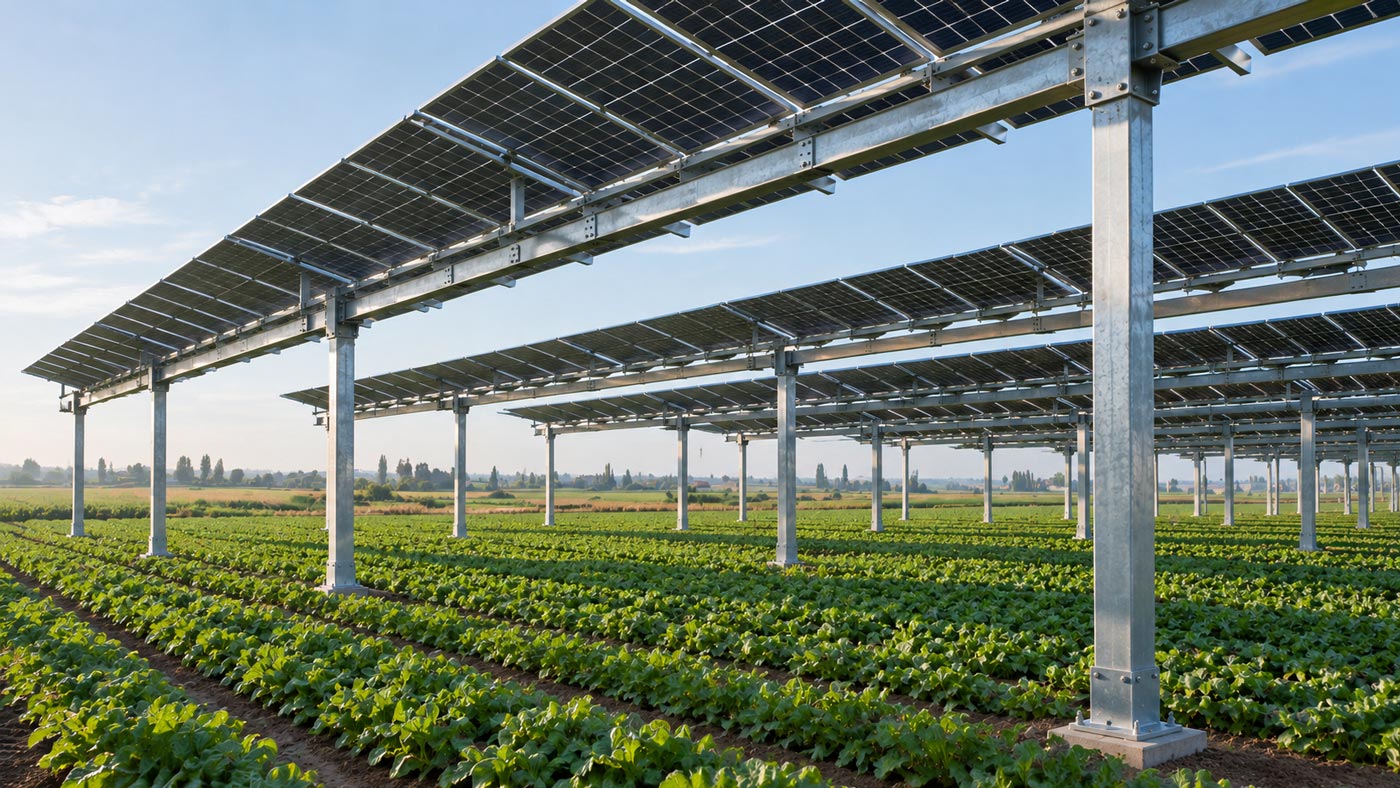
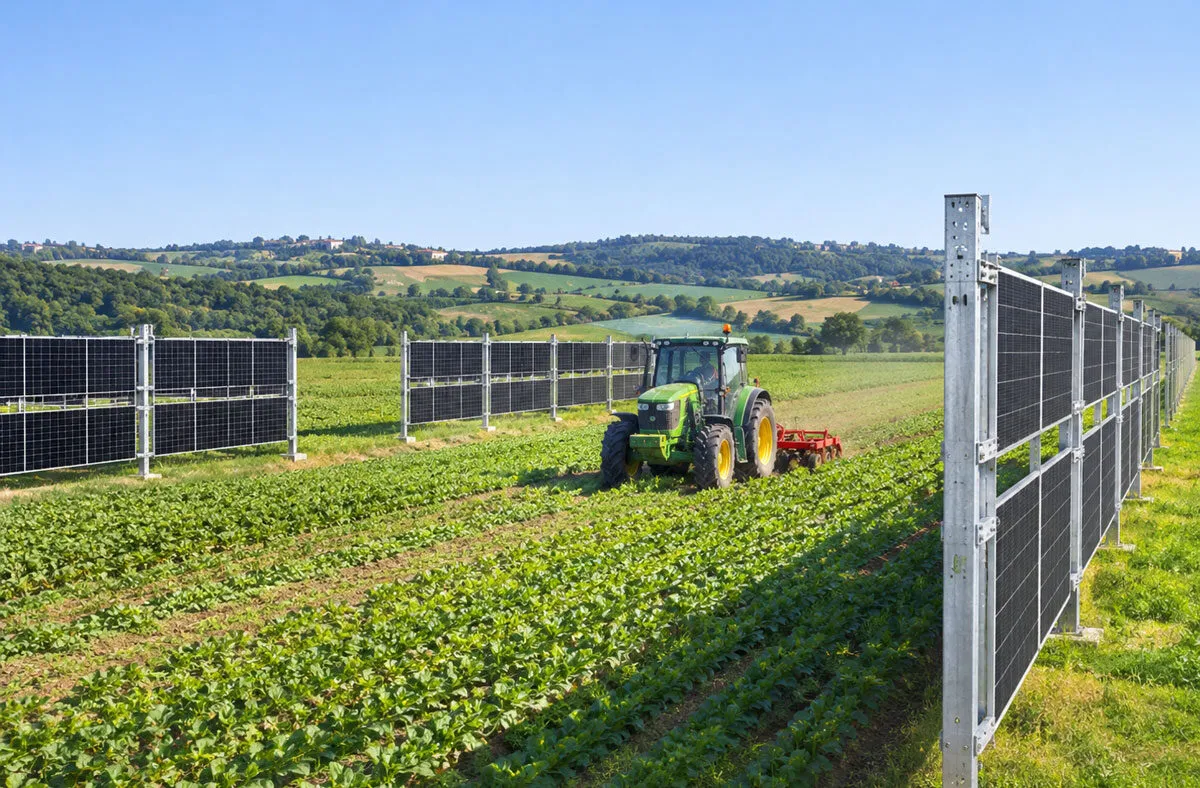
Agrivoltaic system with solar panels on steel structures above a vegetable field

Anyone who builds or upfits a truck or trailer has to choose the material of the side panels early on: steel or aluminum. The choice affects payload, maintenance and the cost of the vehicle over its whole life.

In this guide we compare the two materials on truck and trailer sides. For the general comparison between the two metals, read steel vs aluminum; here we focus on side panels, posts and stakes.

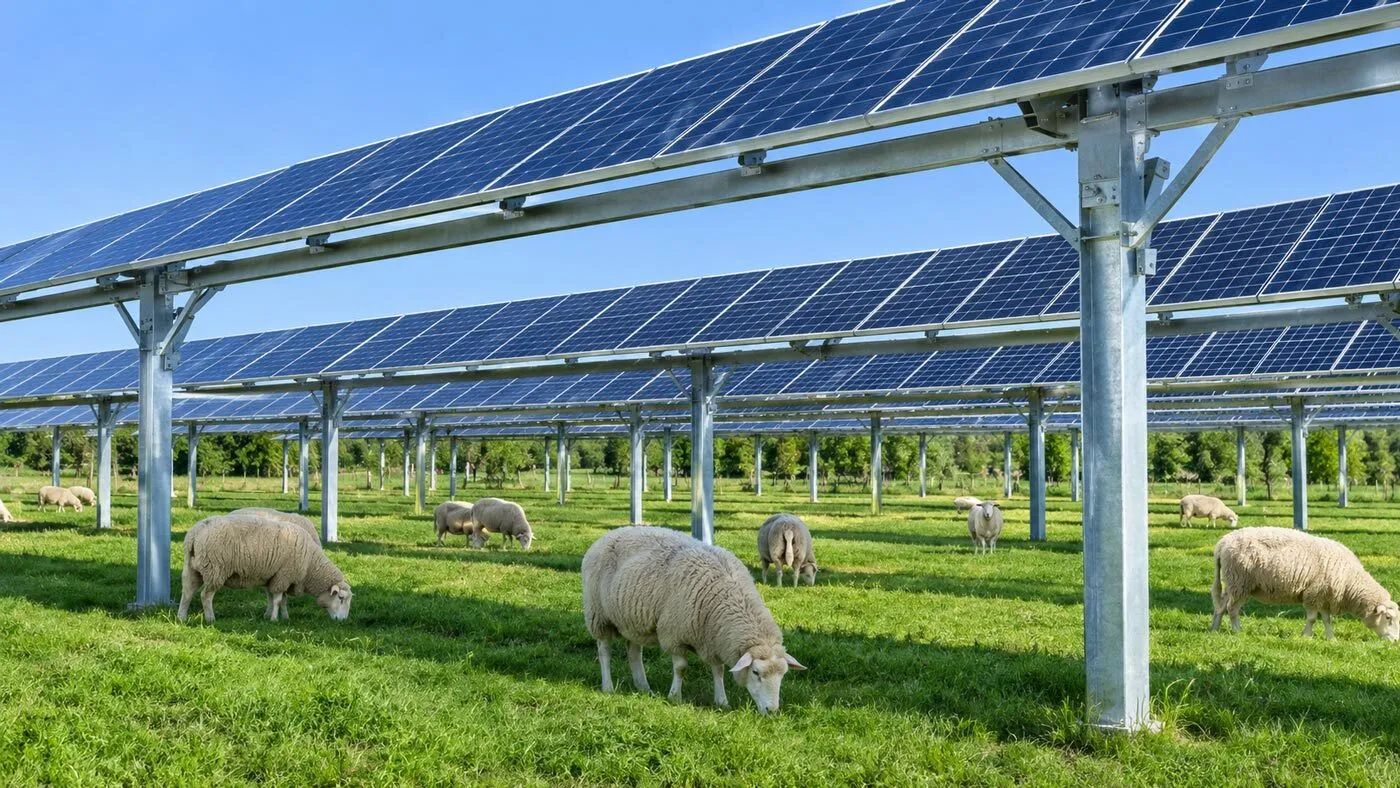
Sheep grazing under an agrivoltaic system with steel structures

In short: what agrivoltaics is

Agrivoltaics combines farming and solar power on the same land. It is a dual use of the soil: food and energy together.
Unlike a standard ground-mounted solar farm, the field keeps being farmed or grazed for the whole life of the system.
To make this possible, the structures are taller or more widely spaced than in a conventional solar plant.

How does agrivoltaics work

Solar modules produce energy as in any other plant. What changes is the layout: structures hold them high or in widely spaced rows, so light, space and access for farm machinery remain under and between the panels. There are three main types.

Type How modules are mounted Where crops grow What the structure needs
Elevated fixed structures high, above the crop under the panels long posts and wide spans
Vertical agrivoltaics upright, often bifacial between the rows profiles sized for wind loads
Single-axis trackers on an axis that follows the sun between the rows precise profiles for moving parts

The choice depends on the crop, the machinery that must pass and the exposure of the land.

Agrivoltaics rules: the Italian example

Rules differ from country to country. In Italy, the 2022 ministerial guidelines define when a plant counts as agrivoltaic: at least 70% of the area must remain farmland, modules may cover no more than 40% and farming must continue over time.

Advanced agrivoltaic systems also need modules raised above the ground, with a minimum height of 1.3 meters where livestock graze and 2.1 meters where crops are grown, plus monitoring of crops and soil.

For designers, this means structures taller than those of a standard ground-mounted plant.

Vertical agrivoltaics with bifacial panels on steel profiles

Which structures an agrivoltaic system needs

The structures are what really sets agrivoltaics apart. You need tall posts, crossbars, module rails and connecting profiles, sized to hold the panels several meters above the ground under wind and snow.

That is why steel profiles are used most, as they are stiffer and suited to long spans. You will find materials and processing on our page on profiles for agrivoltaic systems; for rooftop and standard ground-mounted plants see our custom solar panel profiles.

Agrivoltaics pros and cons

Before designing a system, it is worth listing the benefits and the limits.

  • Pro: the same land produces food and energy, and panel shade can reduce heat stress for some crops and for animals.
  • Pro: the farm earns extra income without giving up cultivation.
  • Con: taller structures need more steel and more careful design than a standard ground-mounted plant.
  • Con: not all crops tolerate shade, so the choice must be made with an agronomist.

Durability and materials of the structures

An agrivoltaic structure stays outdoors for decades, exposed to humidity, irrigation and farm treatments. That is why it is made of galvanized steel, Zinc-Magnesium, Magnelis or Aluzinc, which protect the profile from corrosion. For more on zinc coatings read our galvanized steel profiles guide.

How agrivoltaic profiles are made

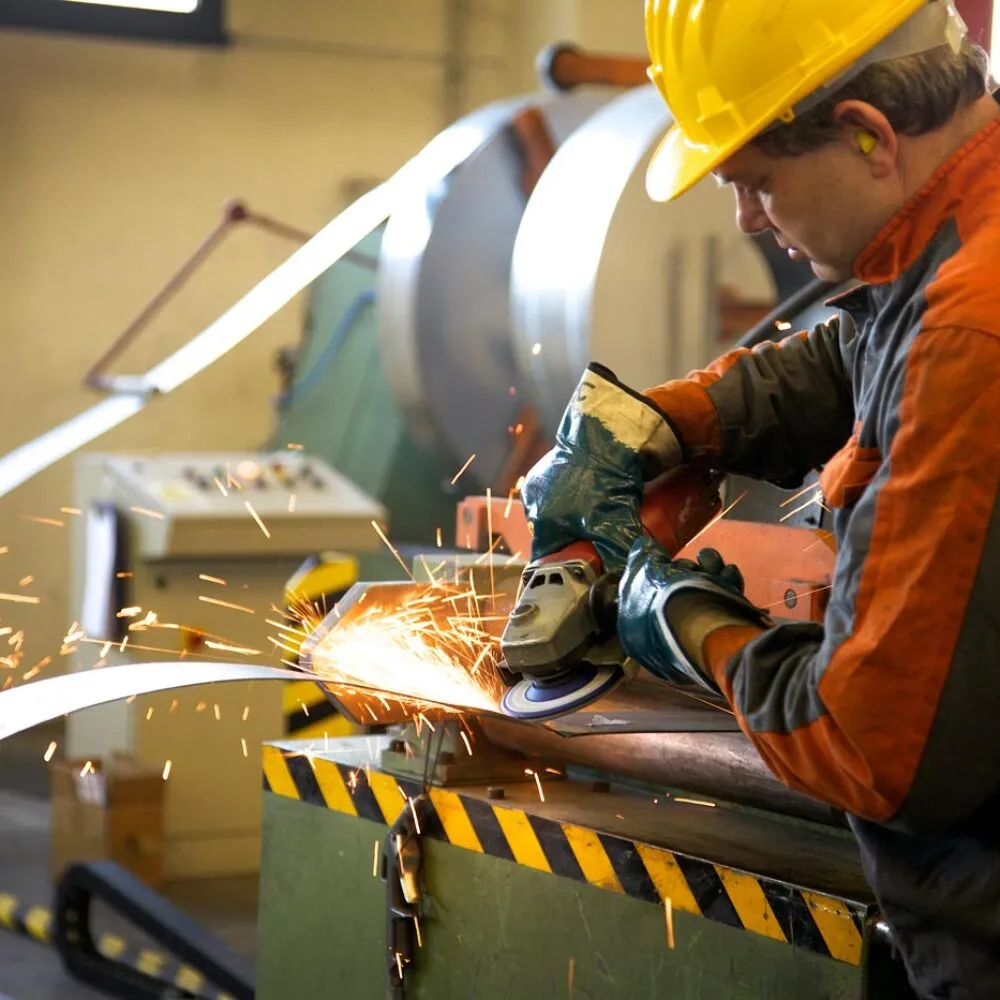
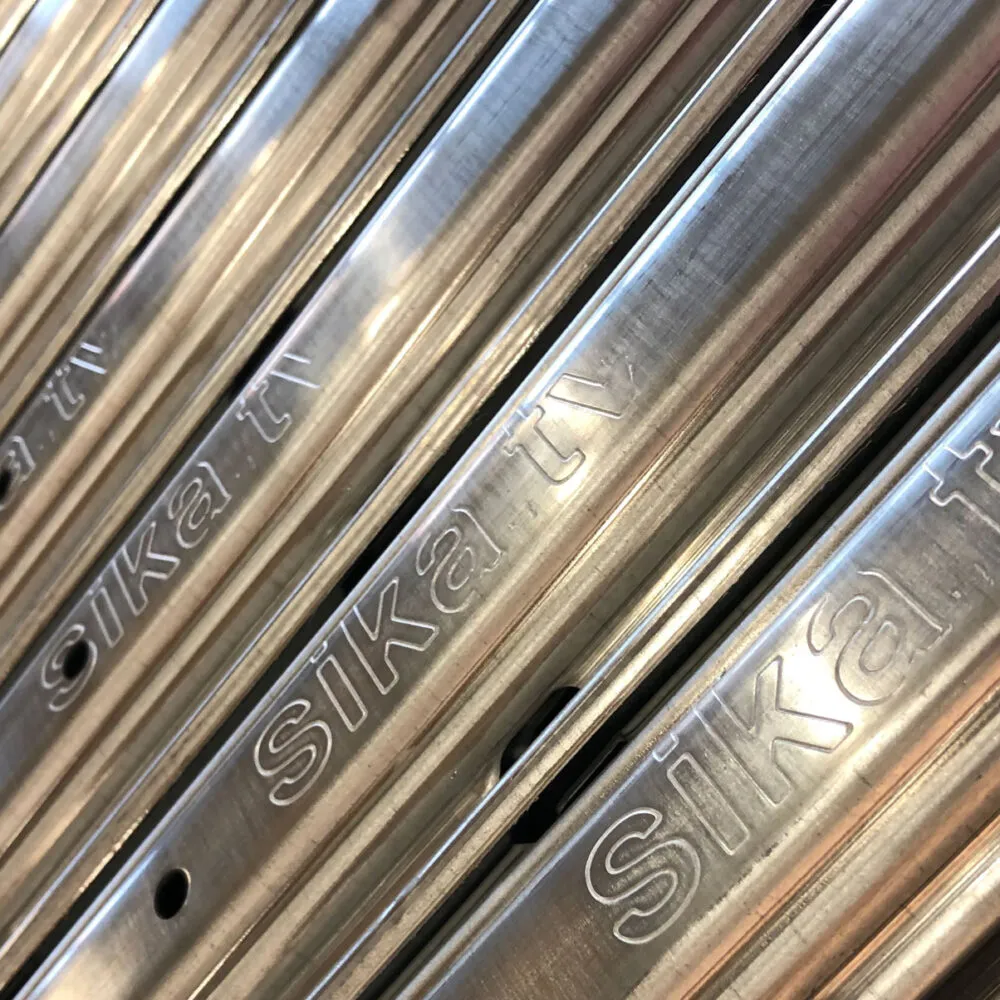
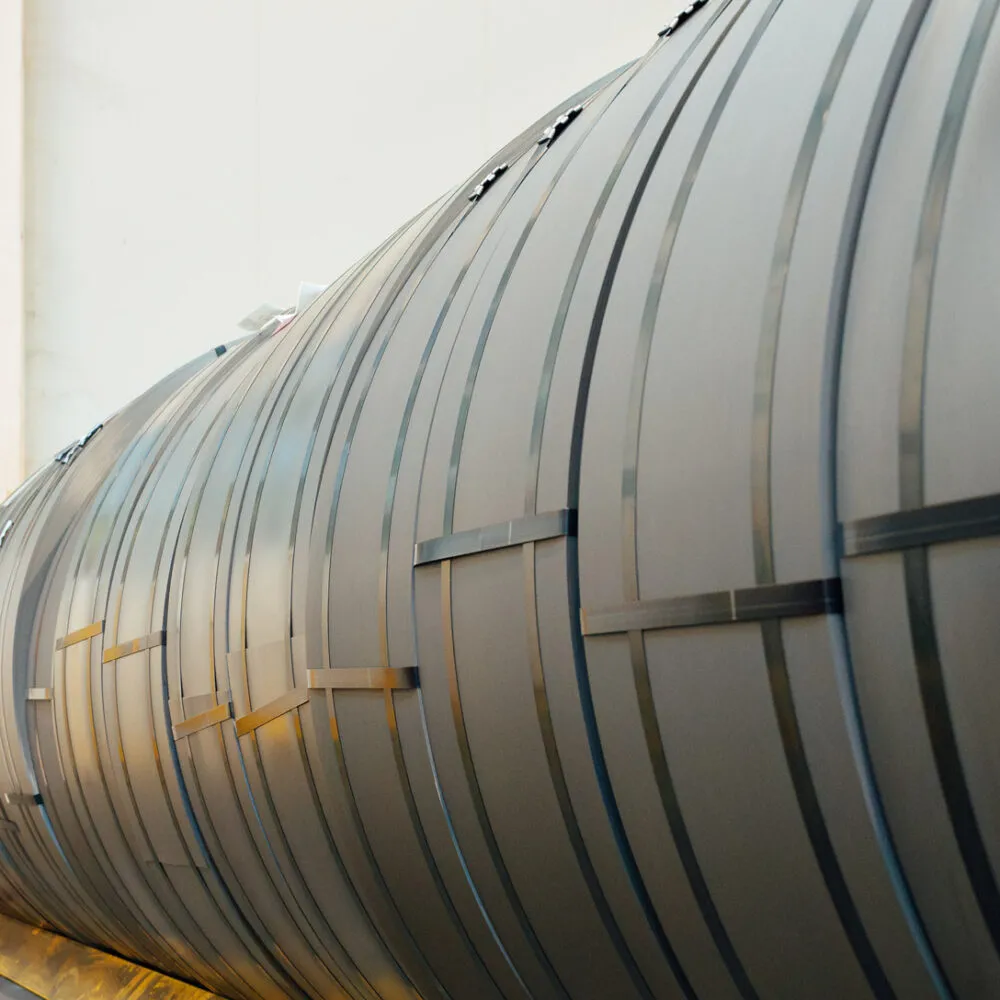
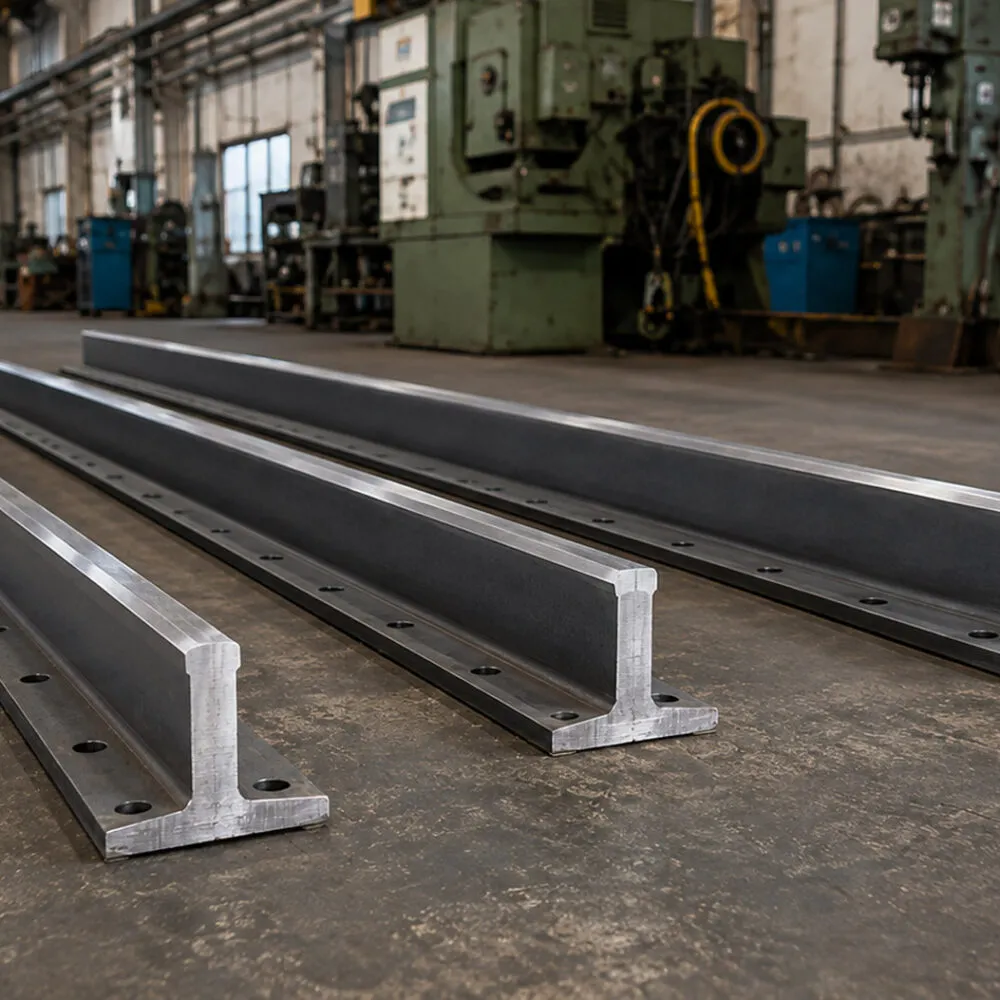
Sika Profili makes the profiles of agrivoltaic structures as a contract manufacturer, to the customer’s drawing. The profile starts from coil with cold roll forming, and processing is done in line: punching, holes and slots, laser cutting, bending and HF welding.

We can produce profiles longer than standard, useful for tall posts, and identical batches over time.

How to plan your project

Start from the crop and the machinery that must pass: they set the height, row spacing and type of structure. Then define the material, thickness and shape of the profiles.

We work thicknesses from 0.4 to 4 mm and strip widths up to 550 mm. Not sure which material fits? Read steel vs aluminum.

Send us the drawing of your structure: we will find the right solution together.

Frequently asked questions

Is it agrivoltaics or agrovoltaics?

Both terms are used, together with agri-PV and dual-use solar, for the same kind of system. Agrivoltaics is the most common spelling in English and the one most people search for.

What are the best crops for agrivoltaics?

Crops that tolerate partial shade work best, such as leafy greens, forage crops and berries. Land under the panels can also be used for grazing. The choice depends on the system type: with elevated structures crops grow under the modules, with vertical modules they grow between the rows.

Why won’t agrivoltaics work for all crops?

Panels reduce the light that reaches the ground. Crops that need full sun can lose yield under the modules, while shade-tolerant crops may even benefit from less heat stress. That is why crop choice and structure design are planned together with an agronomist.

What is the difference between agrivoltaics and photovoltaics?

Photovoltaics is the technology that turns sunlight into electricity. In a standard ground-mounted solar farm the land is used only for energy. In agrivoltaics the same land keeps producing crops or hosting livestock, so modules sit higher or farther apart on taller structures.

Can sheep graze under agrivoltaic panels?

Yes. Sheep grazing is one of the most common uses of agrivoltaic land: sheep keep the grass short and use the shade of the modules. Structures must be high and sturdy enough for the animals to move freely underneath.

Contact us to find out how Sika can support your project with high-quality special profiles and custom solutions.
Open sidebar Open sidebar
Whatsapp Whatsapp