Roll bending, also known as calendering, is a cold forming process that creates uniform, high-precision curves on tubes, sheets and profiles. It is essential for projects that require tight radii or complex geometries, delivering outstanding results in terms of both structural strength and aesthetics.
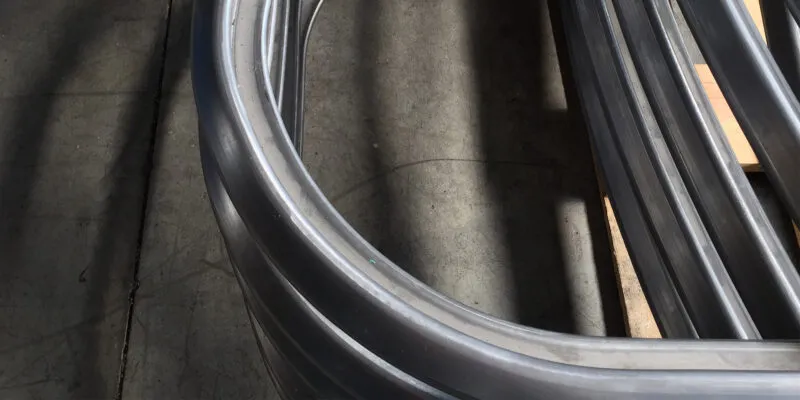
Roll bending of metal profiles
for precise curvatures and complex forms
Roll bending and calendering: precision curves for custom projects
Application sectors
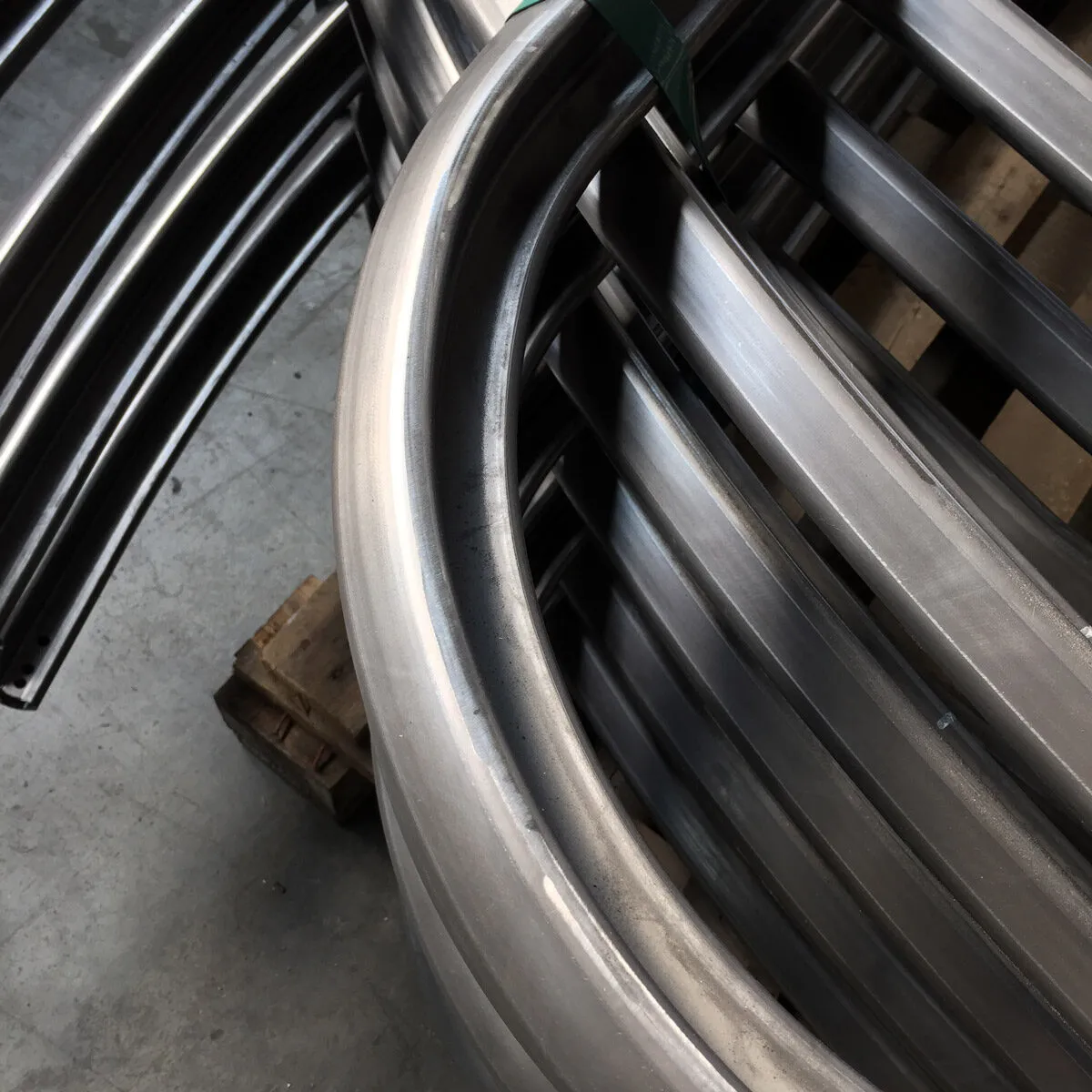
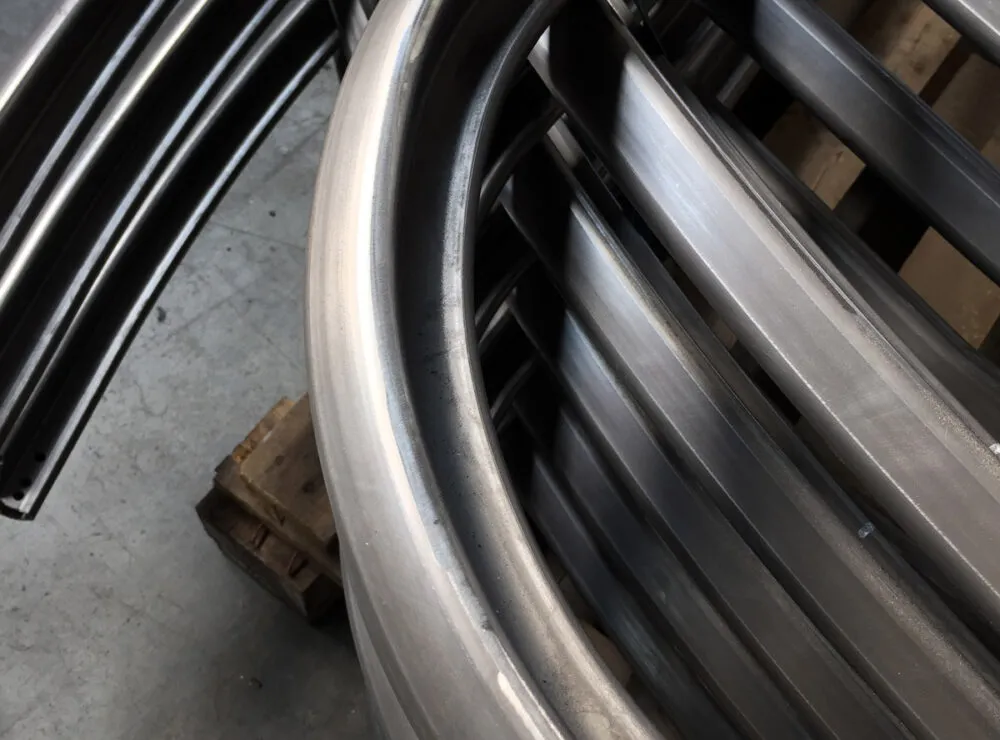
Roll bending is widely used across industrial sectors, making it possible to create components with very precise bending radii and tight tolerances.
In the automotive industry, for example, it is used to produce curved body parts, roll bars and structural reinforcements, improving both the vehicle’s appearance and its safety. In the railway sector, curved panels and profiles for cabins and interiors support the production of wagons with innovative design and high performance. Agricultural machinery and vehicle cabins also benefit from roll bending, which shapes curved frames, protective covers and components designed for operator comfort and functionality.
How roll bending works
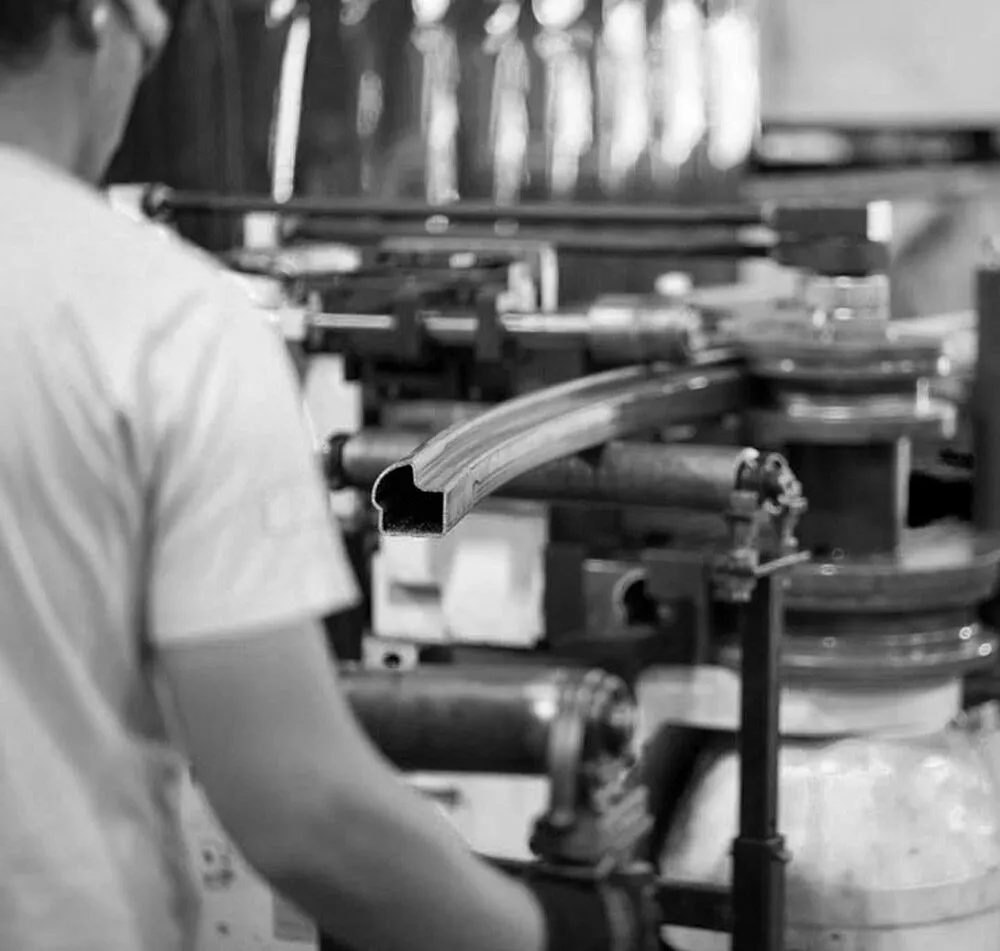
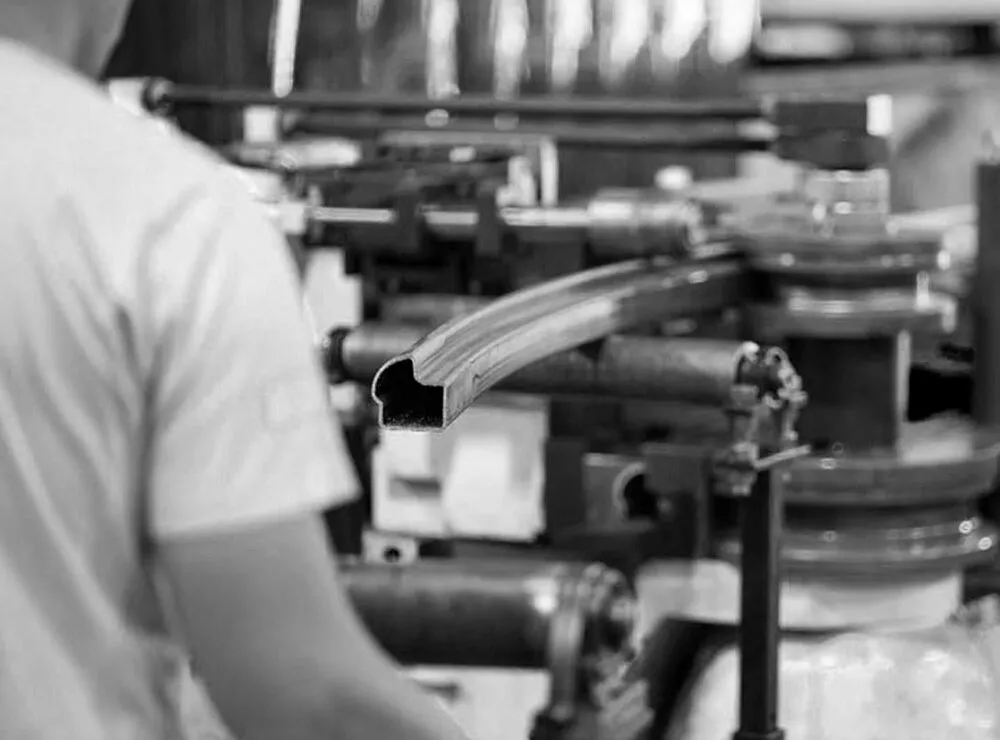
In roll bending the profile passes several times through a set of counter-rotating rollers, which apply gradual pressure and curve it without heat. With each pass the radius gets closer to the one required, until a continuous, uniform curve is obtained. Cold forming preserves the mechanical properties of the material and allows very tight tolerances. To learn more about curved sections, read our guide on bending profiles.
Advantages of cold roll bending
Roll bending meets the growing demand for complex, high-performance structural and design solutions. Whether it is tubes, open profiles or sheet metal, the result is a precisely curved, robust component ready for automotive, construction, furniture and industrial machinery.
Design flexibility


Curvatures adapt to complex designs, enabling innovative styling and cutting edge structural solutions.
High precision
The gradual pressure applied by the rollers allows for minimal tolerances while maintaining consistent material thickness.
Strength and durability
Cold working allows the metal to retain its mechanical properties, ensuring strong, long lasting components.
Fewer welds
Forming the curved part directly often eliminates the need for welding or joints, improving both the structural integrity and the visual appearance.
Roll bending of aluminum and steel profiles
We roll bend tubes, open and closed profiles and custom sections made to drawing, 0.4 to 4 mm thick. Each material requires its own process parameters.
Aluminum profile roll bending
Aluminum has a different springback from steel and requires accurate control of roller pressure. We roll bend it for frames, trims, roofing and furniture components that need to stay light. Discover our special aluminum profiles.
Steel profile roll bending
Carbon, galvanized, stainless and weathering steel are roll bent for structural arches, roll bars, cabin frames and architectural structures, where strength and constant radii are required. Discover our stainless steel profiles and galvanized steel profiles.
For localized bends and angled shapes, discover our metal profile bending.
Profile with Sika
At Sika, roll bending is integrated with cold roll forming, punching and welding: profiles are delivered curved, punched and ready for assembly, all from a single production line.




Frequently asked questions
What is the difference between roll bending and profile bending?
Roll bending, or calendering, is a type of bending performed with rollers: the profile passes through them several times and takes on a continuous, uniform radius, ideal for arches, rings and wide curves. Profile bending is the broader term and also includes localized bends made with presses.
Which profiles and materials can be roll bent?
We roll bend tubes, open and closed profiles and custom sections made to drawing, in carbon, galvanized, stainless and weathering steel, aluminum and copper, 0.4 to 4 mm thick.
How do I request a quote for roll bending a profile?
Send us the drawing with profile section, material, thickness, bending radius and quantity: our technical department will reply with feasibility and a quote.
Other processes
Alongside roll bending, we carry out in-house every process needed to turn a metal coil into a finished component.


