Metal profile bending is a process that deforms elements such as beams, tubes, or shaped sheets, giving them curved geometries of various radii and complexity. Using dedicated machinery, the metal is gradually bent until it reaches the desired radius, maintaining high standards of precision and consistency. This process, typically carried out cold, preserves the mechanical properties of the material and is ideal for applications in construction, architecture, mechanical industry, and design.
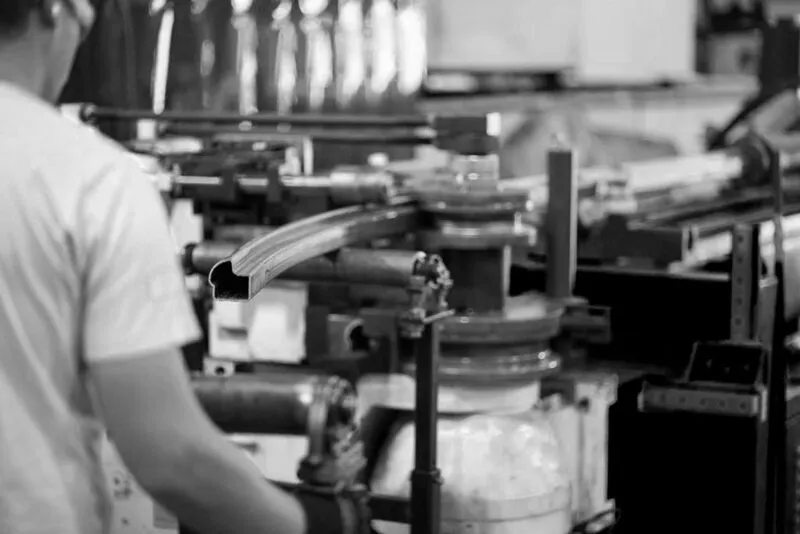
Metal profile bending
for precise curves and complex shapes
Custom metal profile bending
How bending works
Metal profile bending is carried out cold with bending presses or with rollers, depending on the shape required. Presses make localized bends, angled shapes and tight-radius arches; rollers produce continuous, constant-radius curves, which is roll bending of metal profiles. Accurate control of parameters such as bending radius, pressure and feed rate ensures consistent, repeatable results, both for single parts and for production runs. To learn more, read our guide on bending profiles.
Applications and advantages of profile bending
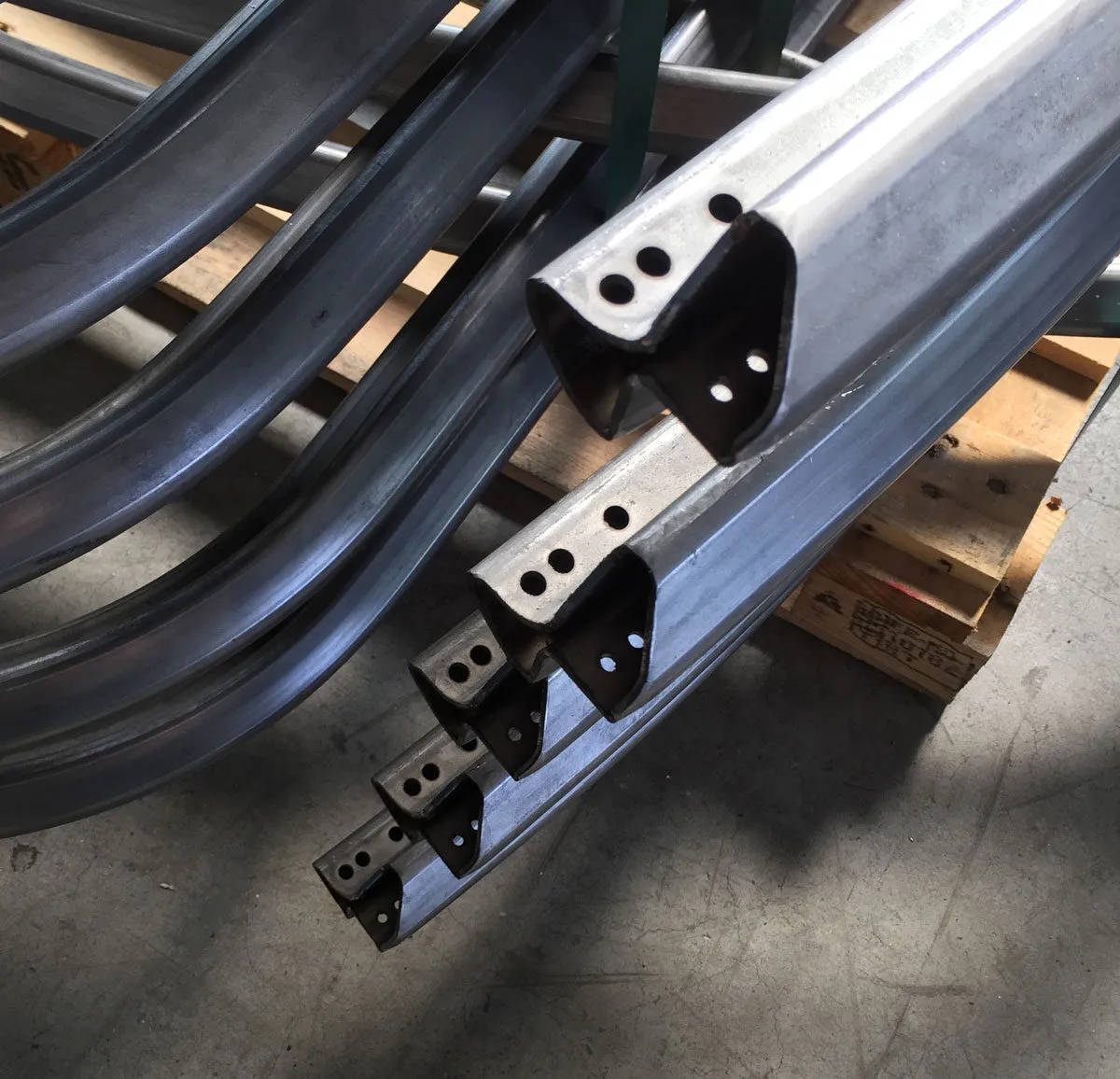
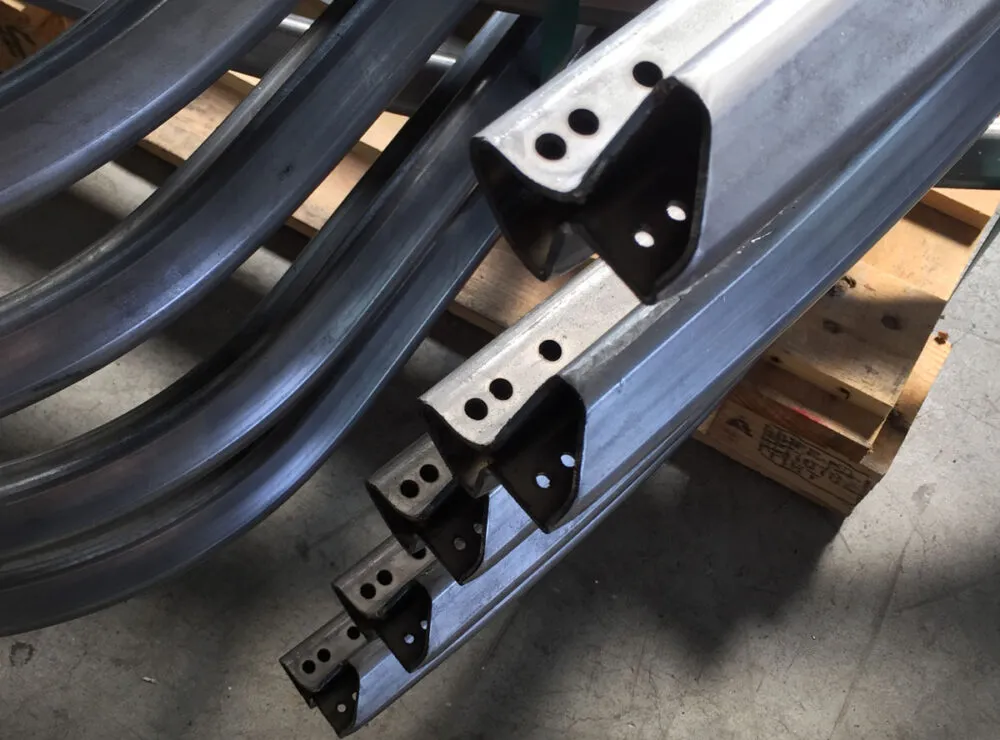
Aluminum and steel profile bending is used for arched windows and doors, architecture, furniture, the automotive industry, shipbuilding and industrial construction. Key benefits include:
High customization


Possibility to create unique sections and tailor-made bends.
Time and material savings
Cold forming reduces the need for welds or joints.
Wide range of design
Arches, ring profiles, and complex shapes enhance both functionality and aesthetics.
Preserved mechanical properties
Cold bending maintains the metal’s strength and ductility.
Aluminum and steel profile bending
Aluminum profile bending
Aluminum is valued for its lightness and corrosion resistance. Cold bending of aluminum profiles requires precise pressure control and produces arches and curves for windows and doors, curtain walls, roofing systems and urban furniture.
Steel profile bending
Steel’s strength and ductility make it ideal for both structural and decorative applications. Controlled bending of steel profiles maintains mechanical integrity, ensuring reliability in structural arches, railings, carpentry, and industrial machinery components.
Profile with Sika
At Sika, profile bending is integrated with cold roll forming, punching and welding: profiles are delivered curved, punched and ready for assembly, all from a single production line.




Frequently asked questions
Why is cold bending preferred for structural steel components?
Without heat, steel undergoes no structural alteration: it keeps its mechanical properties, no heat-weakened zones are created and the surface needs no further treatment. Tolerances also stay consistent from one part to the next.
Do you bend aluminum profiles for windows and doors?
Yes. We bend aluminum and steel profiles for arched windows, doors and glazing, with radii defined on the customer’s drawing and accessory operations such as holes and slots.
How do I request a quote for bending a profile?
Send us the drawing with profile section, material, thickness, bending radius or angle and quantity: our technical department will reply with feasibility and a quote.
Other processes
Alongside profile bending, we carry out in-house every process needed to turn a metal coil into a finished component.


