News

Lift guide rails and brackets: cold formed sections for elevator manufacturers

In the vertical transportation industry, lift guide rails represent one of the most critical components for ensuring safe and smooth elevator operation. These precision-engineered metal sections guide the elevator car and counterweight through the shaft. They provide vertical alignment, lateral stability, and a braking surface during emergency stops. For elevator manufacturers seeking reliable components, cold formed brackets and mounting sections offer exceptional dimensional accuracy, structural strength, and cost-effectiveness.

What are lift guide rails and how do they work

Lift guide rails are vertical metal tracks installed within the elevator shaft that direct the movement of the cabin and counterweight between floors. Without properly engineered elevator guide rails, the car could sway, vibrate, or derail, creating serious safety hazards for passengers and maintenance personnel. These components serve multiple essential functions. They maintain precise vertical alignment throughout the travel path, act as a braking surface when the safety gear engages during emergency stops, and minimize lateral movement to ensure passenger comfort and system stability.

The quality of guide rails directly impacts ride smoothness, noise levels, and long-term reliability. Cold formed sections offer significant advantages over traditional hot-rolled alternatives. These include tighter dimensional tolerances, superior surface finish, and the ability to produce complex geometries without secondary machining. For elevator manufacturers, these characteristics mean faster installation, reduced on-site adjustments, and improved overall performance.

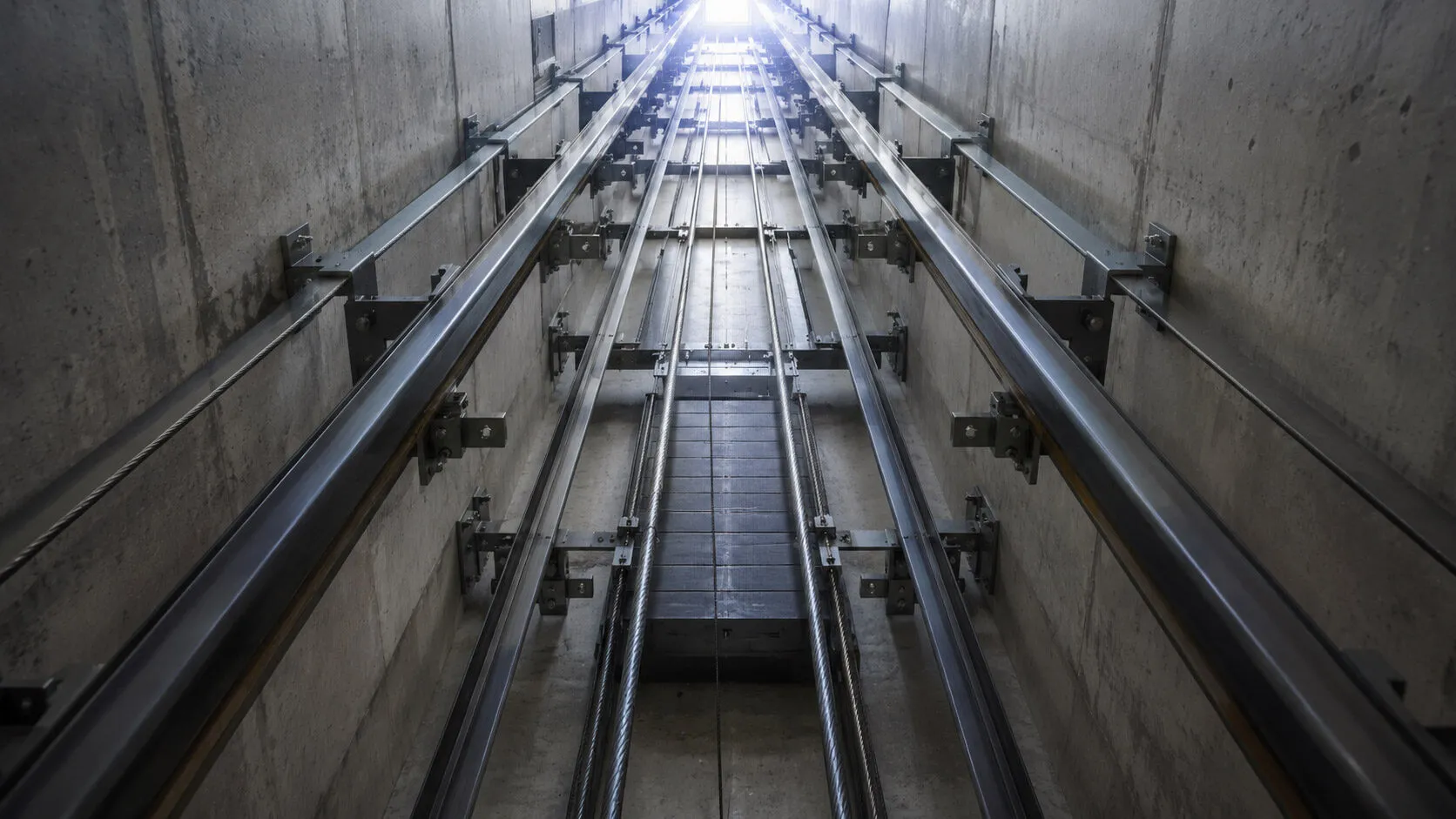
Vertical steel guide rails mounted on shaft walls with brackets at regular intervals

Types of lift guide rails for different applications

Understanding the different types of elevator guide rails helps manufacturers select the optimal solution for each project. The most common configurations include T-shaped rails, flat rails, channel rails, and specialty profiles.

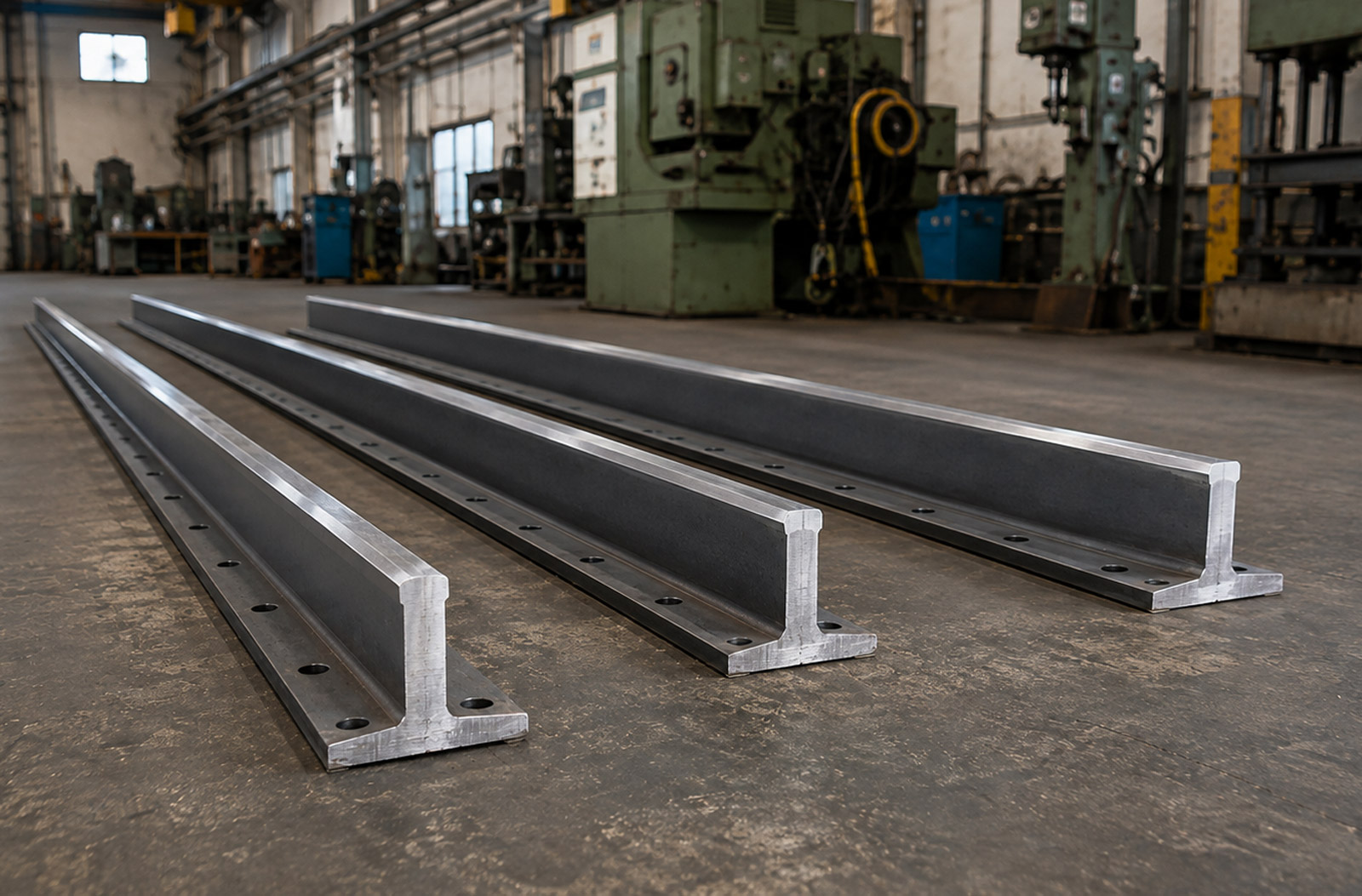
T-shaped guide rails feature a distinctive cross-section. One side rests against the shaft wall while the car’s rollers engage with the vertical flange. This design offers excellent stability and straightforward installation. It is suitable for a wide range of elevator types, from residential lifts to commercial passenger elevators.

Flat rails provide a clean aesthetic. They are primarily used in low-rise applications or where space constraints limit profile options. Channel rails feature a U-shaped enclosed design. They deliver enhanced rigidity and superior lateral stability, making them ideal for heavy-duty freight elevators or high-speed installations.

Each rail type calls for a different manufacturing route. Machined T-profiles are produced by drawing and grinding, while open and closed sections such as channels, angles and mounting components are ideally suited to cold roll forming. The process delivers consistent quality along the entire length and allows mounting holes, alignment slots and fixing points to be punched in line, simplifying installation and reducing assembly time on site.

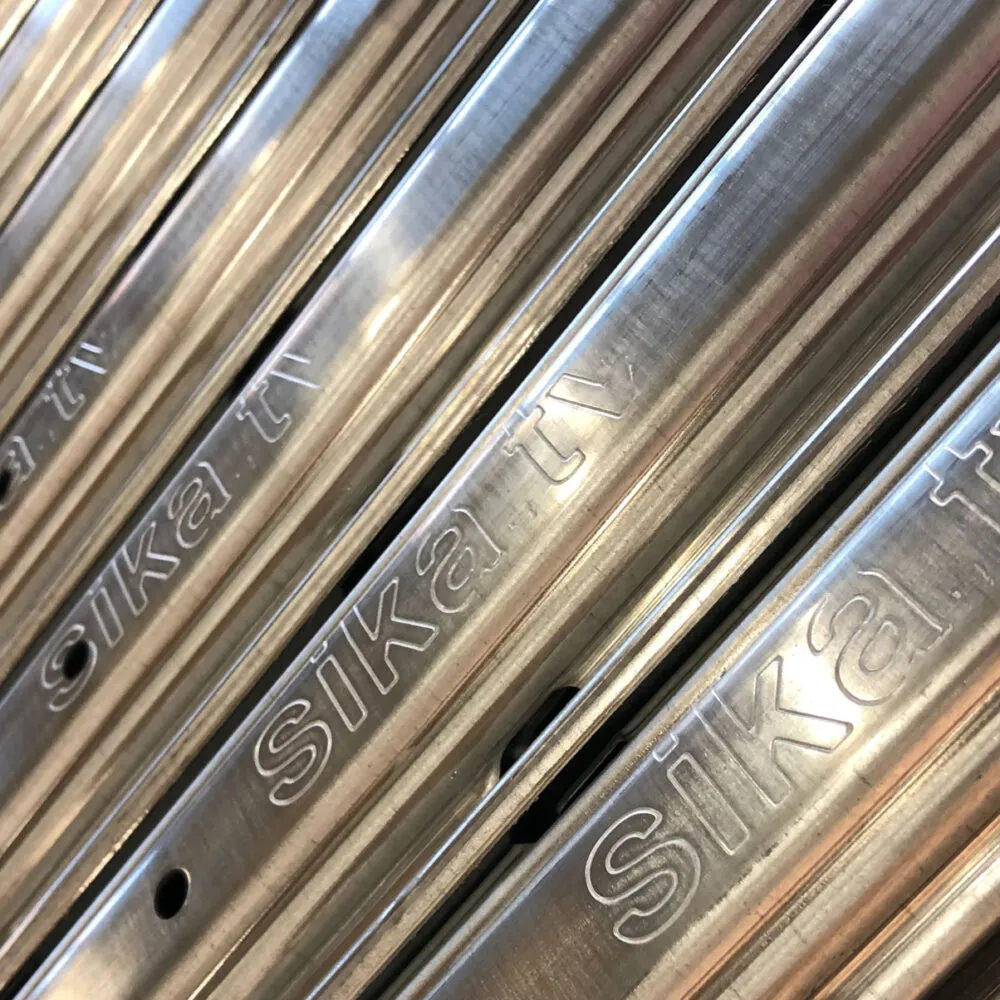
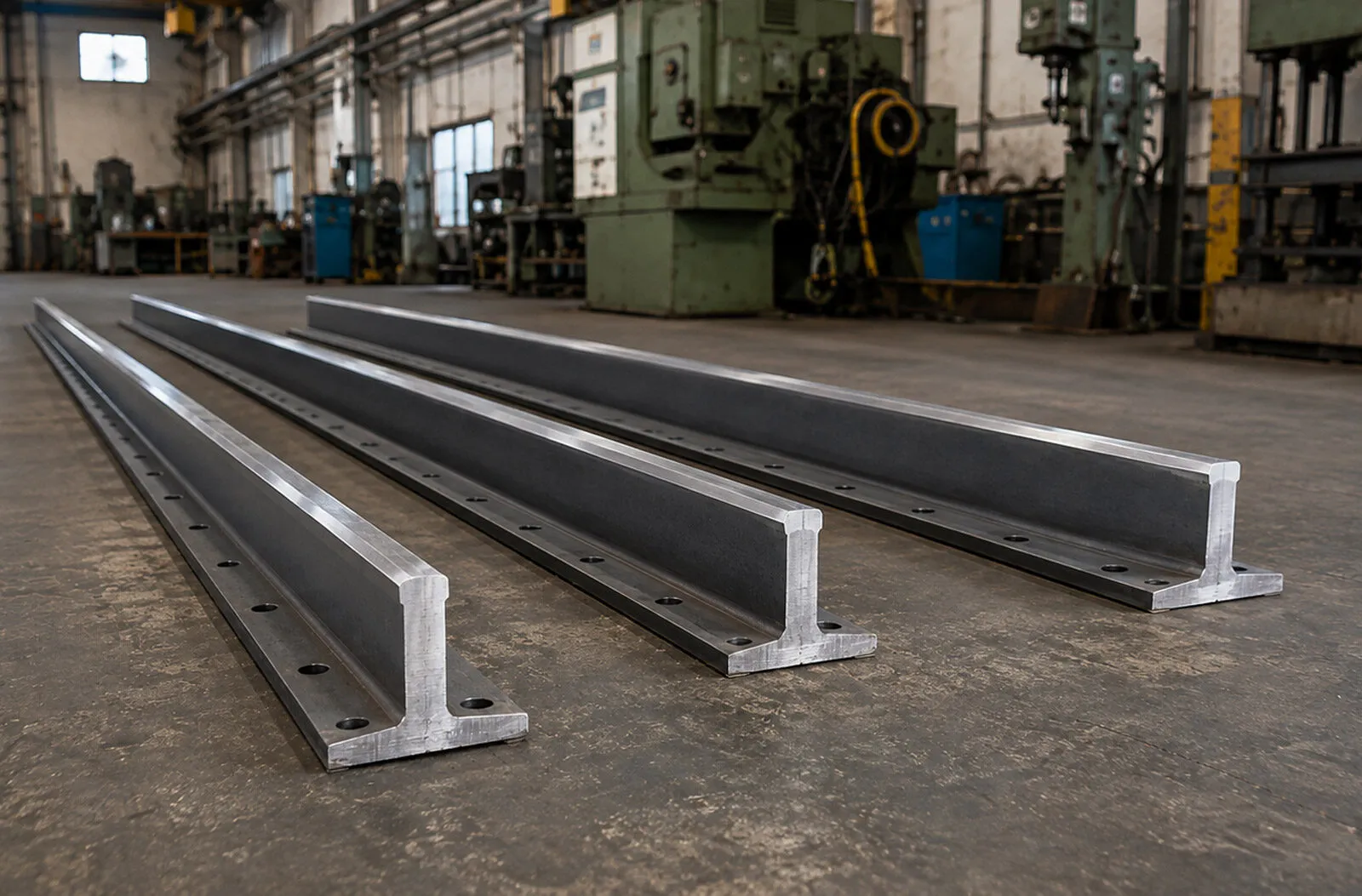
Cold formed steel elevator guide rails with pre-punched mounting holes

Elevator guide rails dimensions and specifications

Selecting the correct lift guide rails dimensions is essential for safe operation. Guide rails must comply with international standards such as ISO 7465, EN 81, or equivalent national regulations. These define requirements for material properties, dimensional tolerances, and surface characteristics.

Standard section profiles commonly used in the industry include:

  • T70-1/B: suitable for low-speed residential elevators and light-duty applications
  • T75-3/B: commonly specified for medium-capacity passenger lifts
  • T89/B: appropriate for higher-capacity commercial elevators
  • T127/B: designed for heavy-duty freight elevators and high-speed installations

These standardised T-sections are produced by drawing and grinding, and are supplied in 5-metre lengths connected via fishplates. The total quantity required depends on the lifting height and pit depth.

Brackets and mounting components

Alongside the rails themselves, every installation requires brackets, fixing plates and support sections. Unlike the rails, these are short components — typically between 200 and 1300 mm — which makes them ideally suited to cold roll forming.

Sika produces these components to customer drawings, in thicknesses from 0.4 to 4 mm and strip widths up to 550 mm. Holes, slots and fixing points are punched in line during forming, so the component arrives ready to install with no secondary machining. Custom geometries can be developed for specific shaft configurations or retrofit projects.

Lift guide rail brackets and mounting systems

The lift guide rail bracket is equally important as the rail itself. It provides the structural connection between the guide rail and the shaft wall. These mounting components must withstand significant dynamic loads during normal operation and emergency braking. They must also maintain precise rail alignment over the elevator’s service life.

Cold formed brackets offer several advantages for elevator installations:

  • Dimensional consistency: tight manufacturing tolerances ensure reliable fit and alignment
  • Material efficiency: cold forming processes minimize waste while maintaining structural integrity
  • Design flexibility: complex geometries can be integrated during production
  • Integrated features: holes, slots and fixing points are punched in line, with no secondary machining
  • Cost-effectiveness: automated production enables competitive pricing for standard and custom configurations

Bracket designs vary according to installation requirements. Options include wall-mounted versions for concrete shafts, adjustable brackets for steel-framed structures, and specialized solutions for retrofit applications. Working with an experienced profile manufacturer ensures access to engineering support for optimizing bracket design.

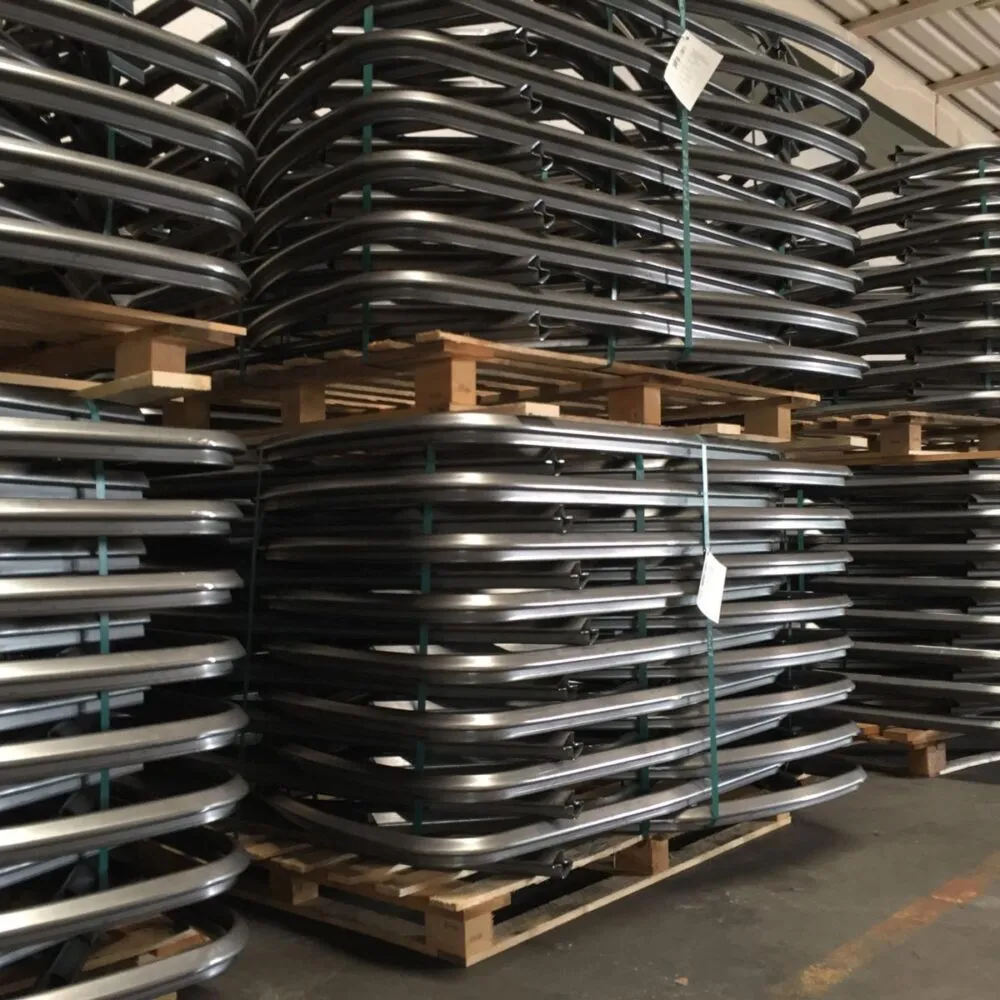
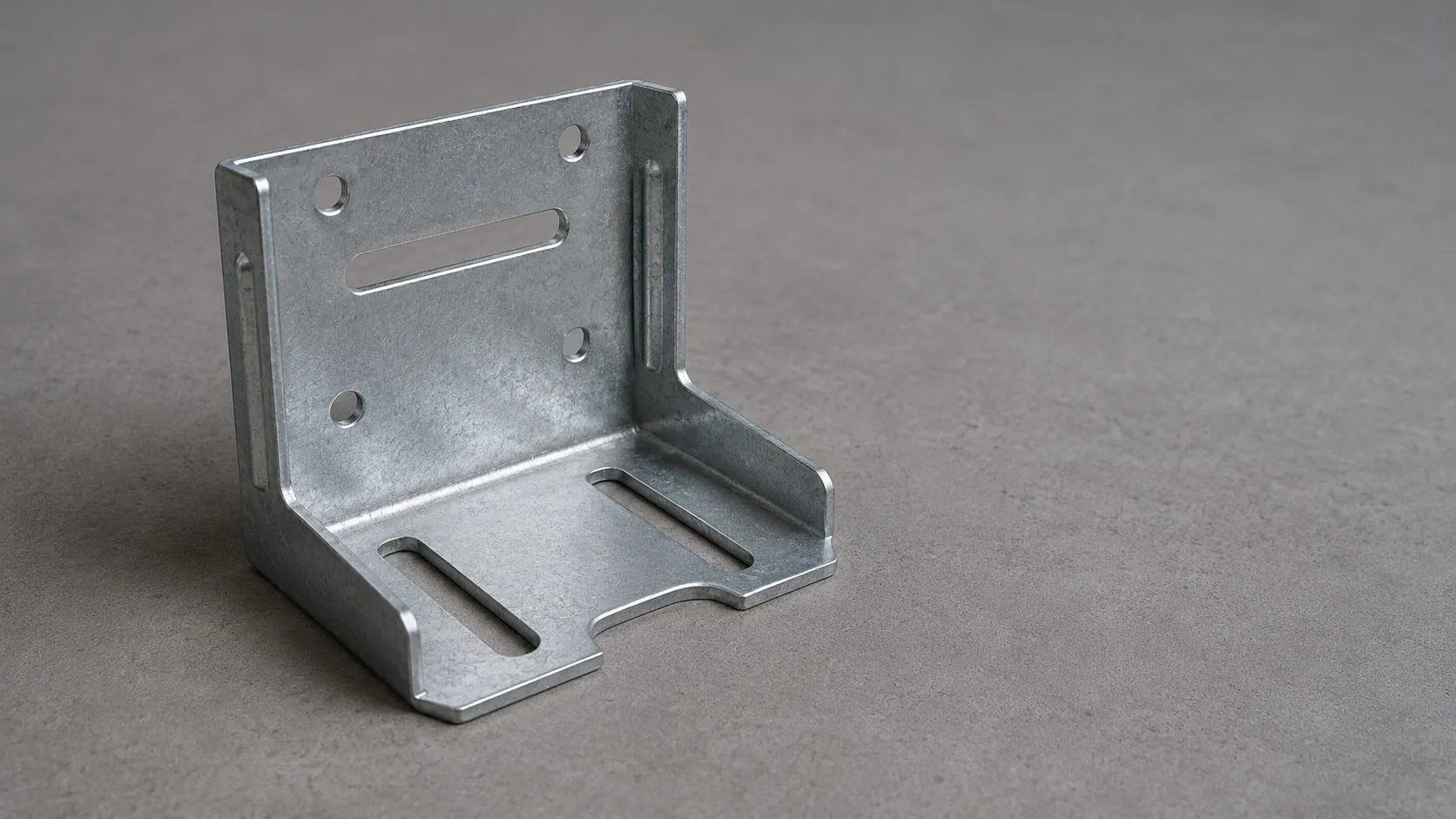
Cold formed steel bracket for elevator guide rails with adjustment slots

Cold forming technologies for elevator components

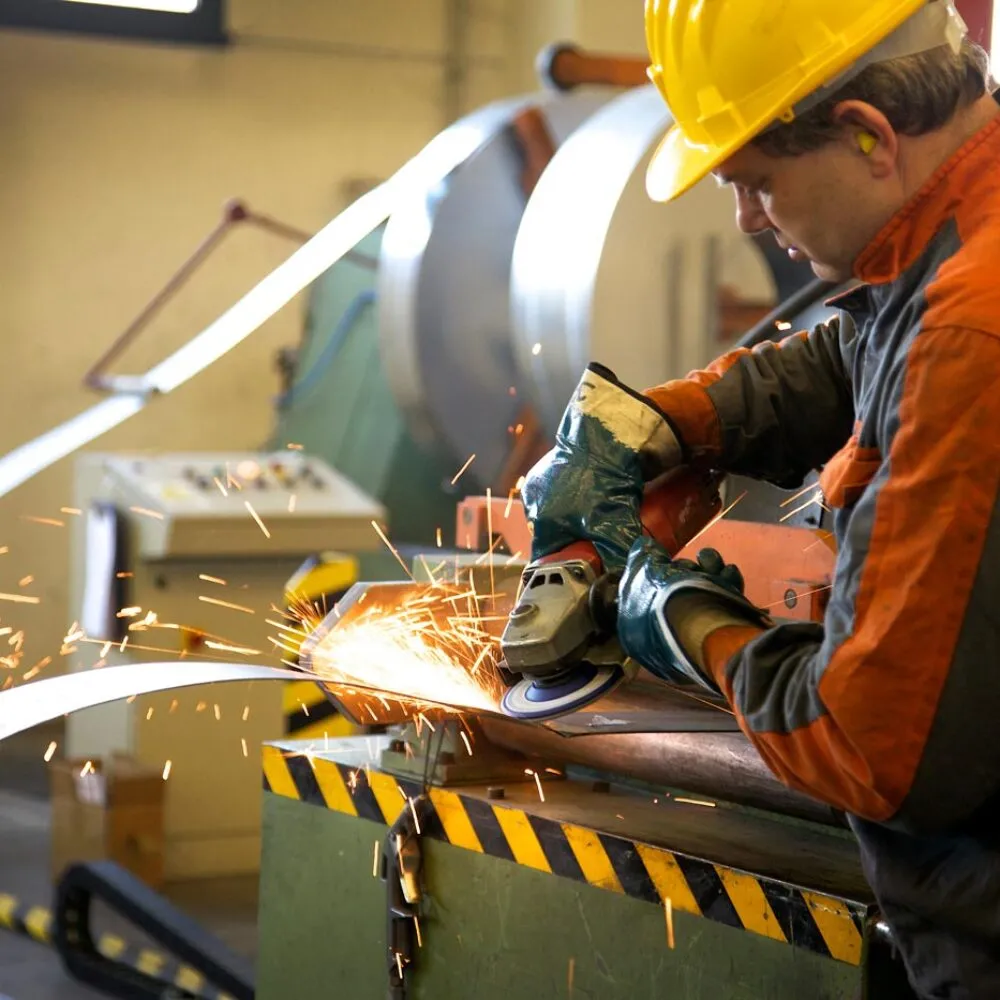
Cold roll forming is the optimal manufacturing method for brackets and mounting sections. This process passes steel or aluminum coils through progressive rollers. The material is gradually shaped into the desired cross-section without heating. This preserves the metal’s mechanical properties while achieving excellent dimensional accuracy.

The main cold forming technologies used for elevator component production include:

  • Cold roll forming: ideal for producing open and closed sections with consistent geometry along the entire length
  • Cold stamping: enables three-dimensional shapes and sharp bends for brackets
  • Punching: creates precise holes, slots, and openings for fastening purposes
  • HF welding: joins formed sections to create closed tubular profiles
  • Calendering and bending: produces curved sections for specialized applications

These manufacturing processes can be combined within integrated production lines. Features such as pre-punched mounting holes and cut-to-length sections can be completed in a single operation. This approach reduces handling, minimizes dimensional variation, and shortens lead times.

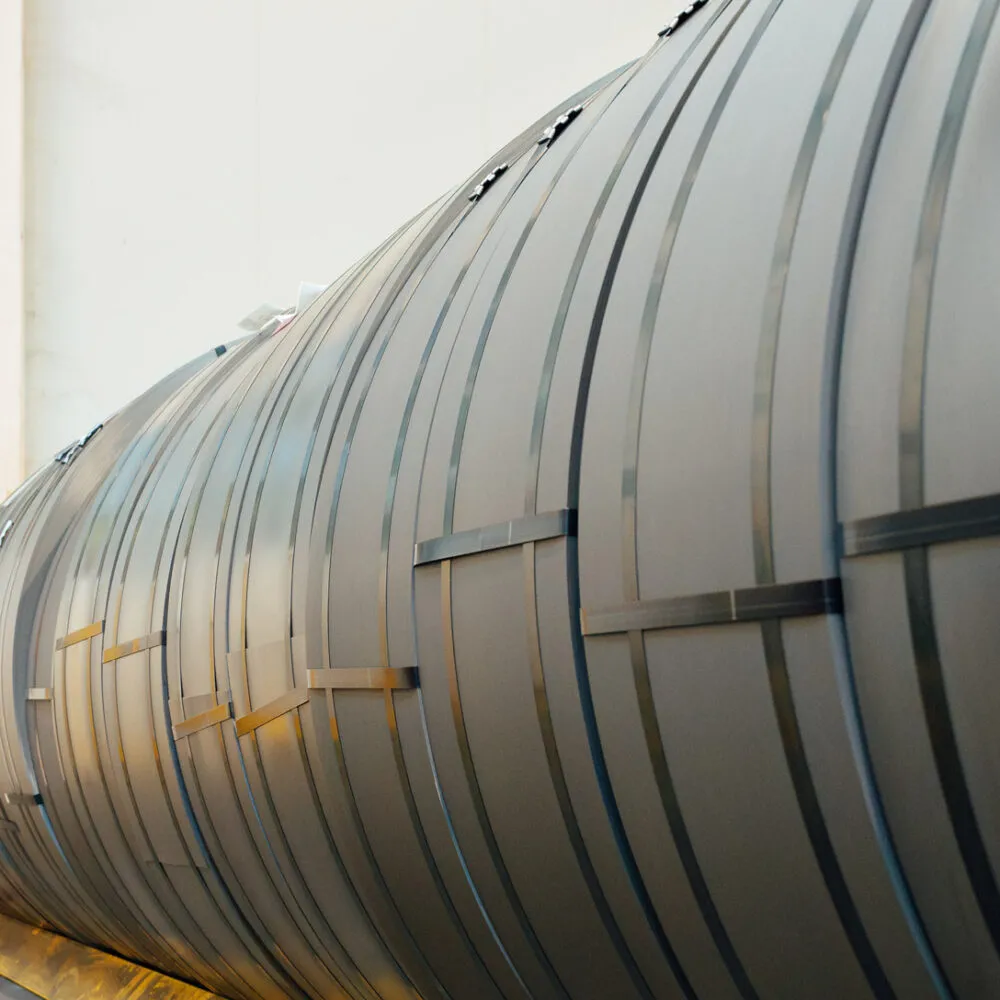
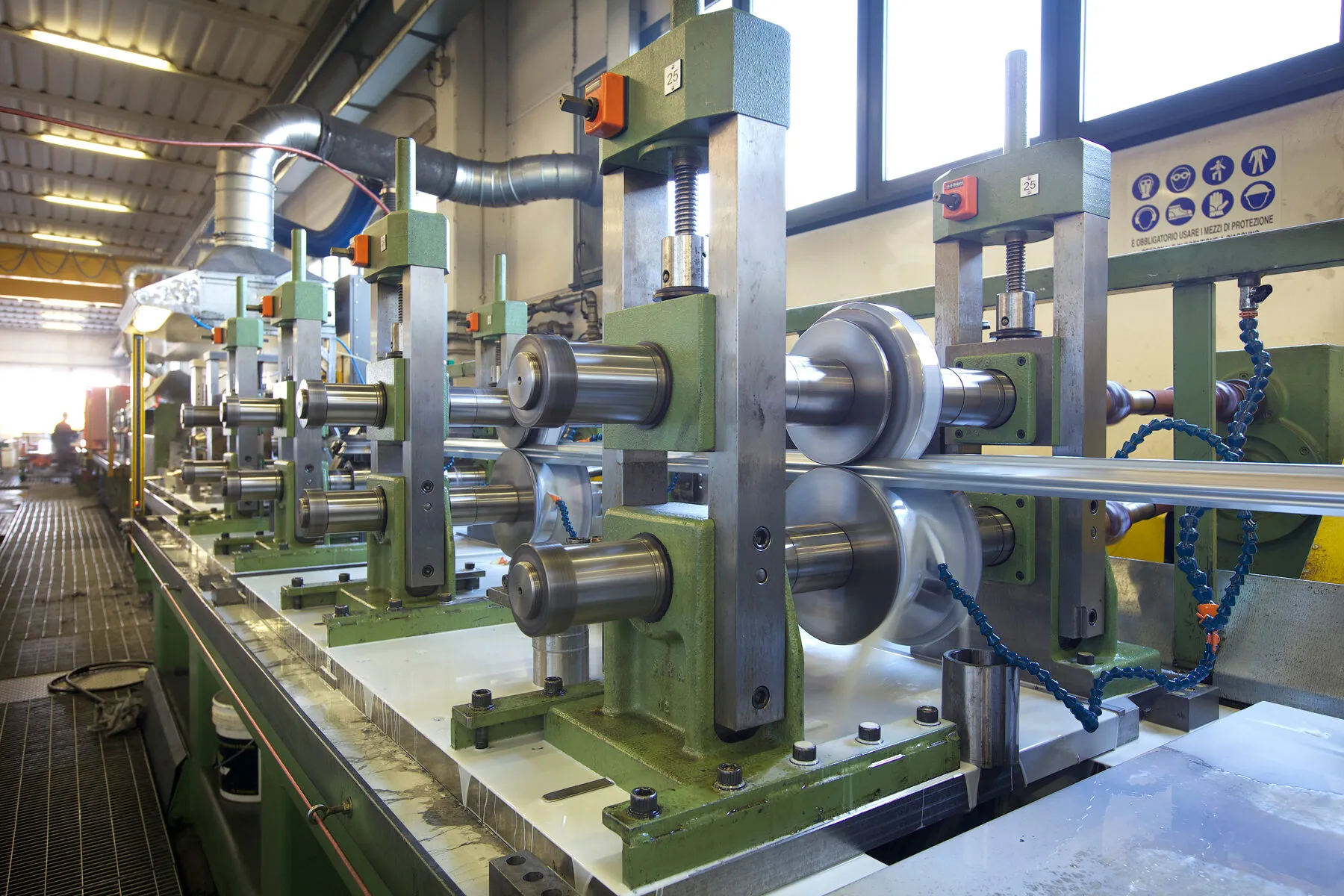
Steel strip passing through roller stations on a cold roll forming line

Material options for lift guide rails

The choice of material significantly influences performance, durability, and cost. Leading manufacturers offer profiles in various steel and aluminum grades.

Carbon steel provides excellent strength-to-cost ratio for standard installations. It is commonly supplied as pre-galvanized or pre-coated strip, with the protective layer applied to the coil before forming.

Galvanized steel delivers enhanced corrosion resistance for humid environments. Stainless steel offers maximum durability for demanding applications such as coastal locations or industrial facilities.

Aluminum profiles provide significant weight advantages. They maintain adequate structural performance for residential elevators and light commercial applications. The natural oxide layer on aluminum surfaces provides inherent corrosion protection. This reduces maintenance requirements over the system’s service life.

Sika: your partner for custom lift profiles

Sika Profili is an Italian company with over 30 years of experience in custom metal profile production. The company manufactures cold formed brackets, mounting components and structural sections for lift systems, serving elevator manufacturers across Europe and internationally.

Processing capabilities include cold roll forming, cold stamping, punching, HF welding, and calendering. Components are produced to customer drawings in lengths from 200 to 1300 mm, thicknesses from 0.4 to 4 mm and strip widths up to 550 mm. Sika works with carbon steel, galvanized and stainless steel, corten, aluminium and copper. Sika does not hold a standard catalogue: every section is developed from the customer’s drawing.

With ISO 9001, ISO 14001, and ISO 45001 certifications, Sika guarantees consistent quality and environmental responsibility. The technical team provides personalized consulting from initial design through final delivery. All products are 100% Made in Italy, manufactured from certified and fully traceable materials.

FAQ

Contact us for more information

Open sidebar Open sidebar
Whatsapp Whatsapp