Closed tubes: when torsion is the issue
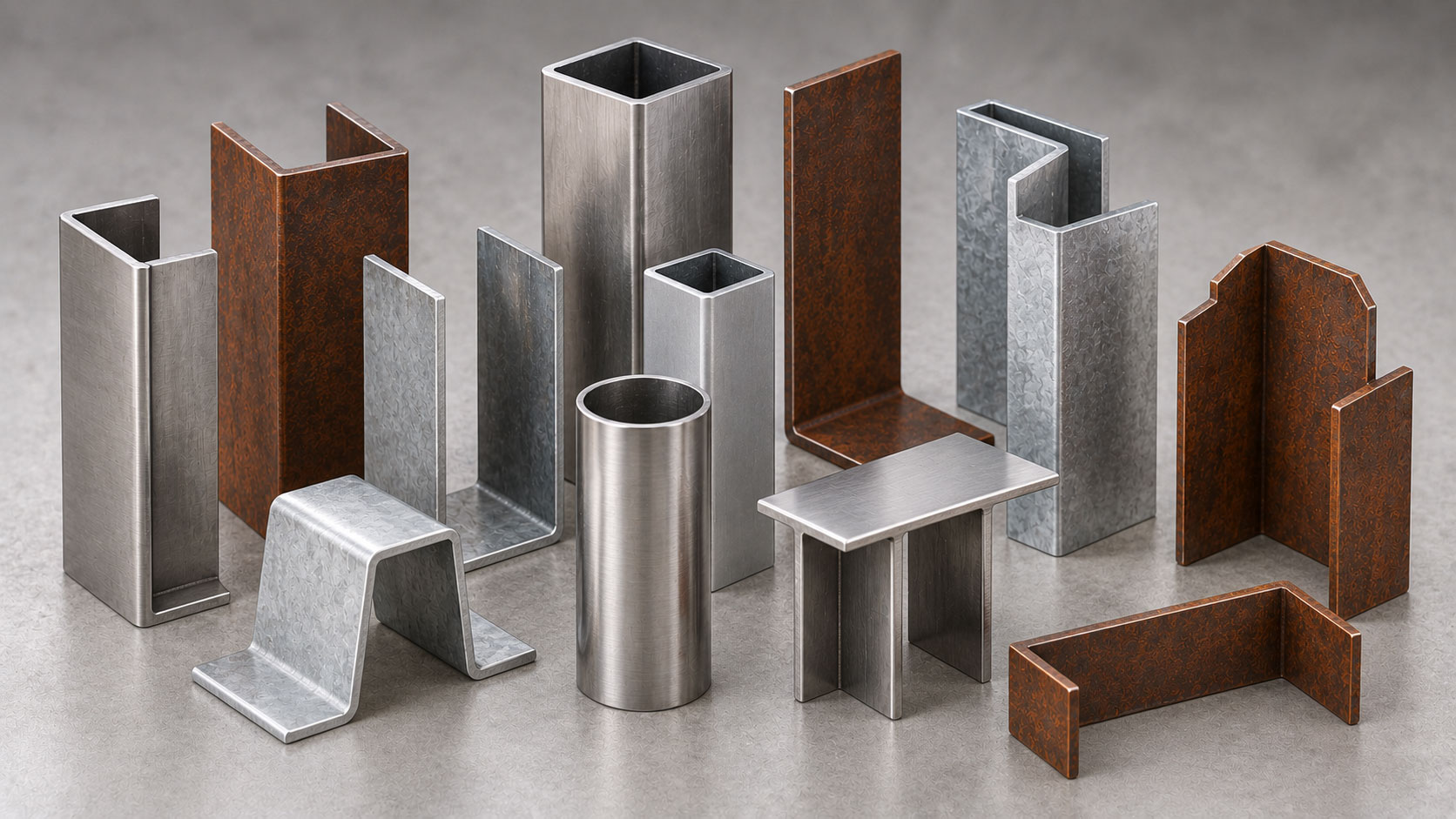
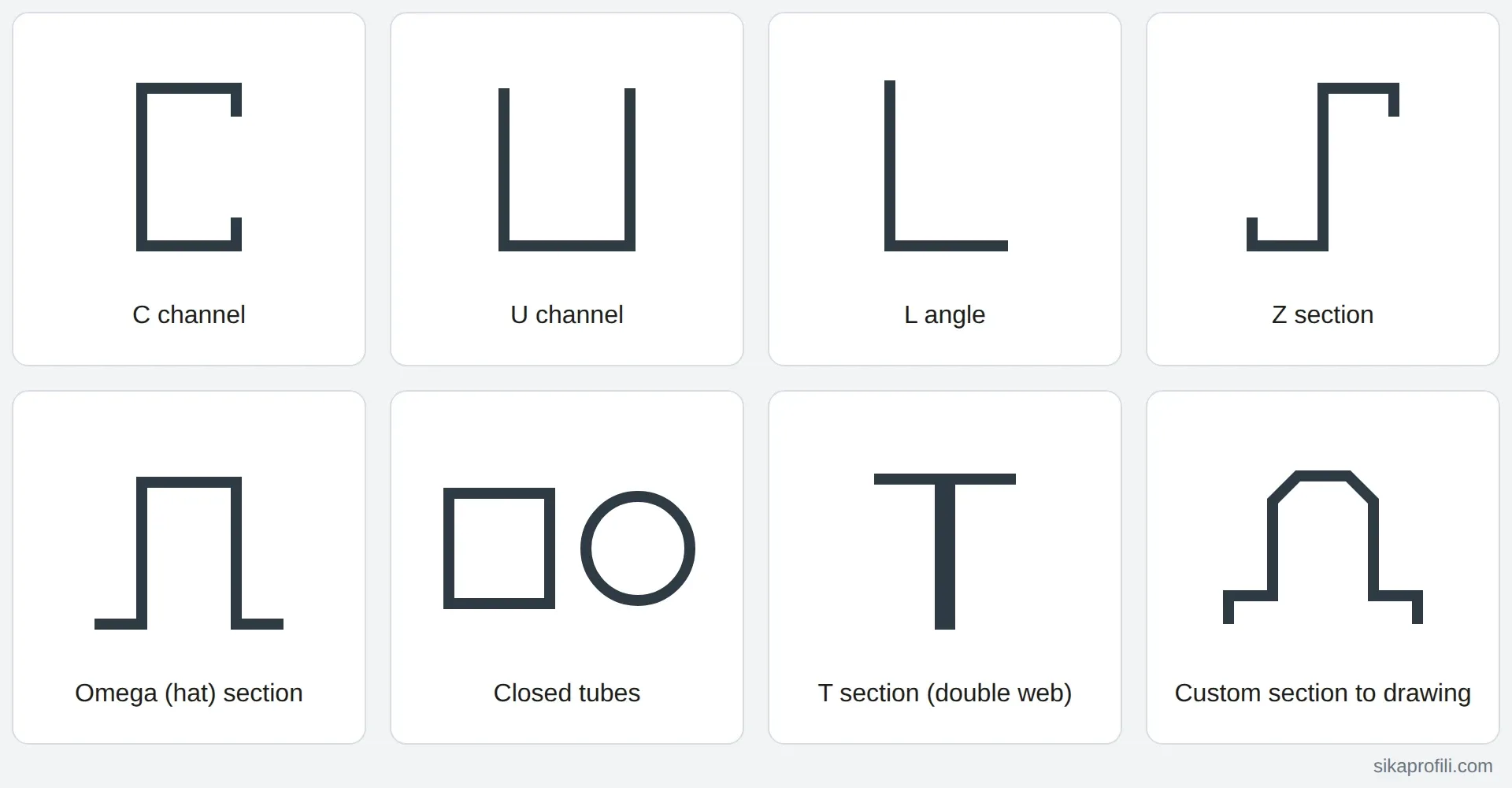
Open sections (C, U, L, Z and omega) are efficient in bending but weak in torsion. When a profile has to carry eccentric loads or twisting forces, it needs a closed section. In cold roll forming, the strip is formed until the section closes, then seam-welded in line with high-frequency (HF) welding. The result is square, rectangular and round tubes, as well as closed sections with special geometries, for frames, railings, load-bearing structures and furniture.
Can a T section be cold formed?
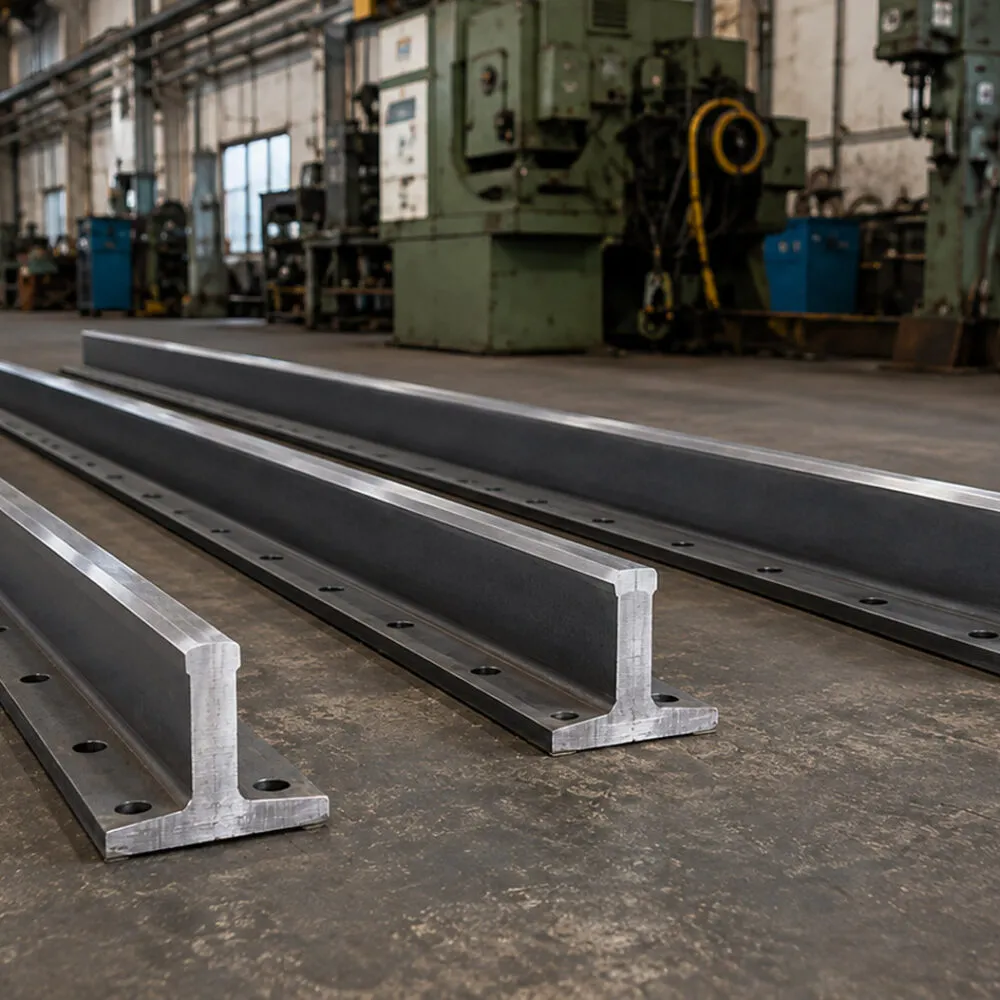
Yes, with one trick. Heavy structural T sections are hot rolled or extruded in aluminium. In cold roll forming, a T is made by folding the strip back onto itself: the web is double thickness, with no welding, and the flange stays flat. This is the typical solution for suspended ceiling grids and for support and stop profiles, where low weight, precision and high volumes matter.
Custom sections to drawing
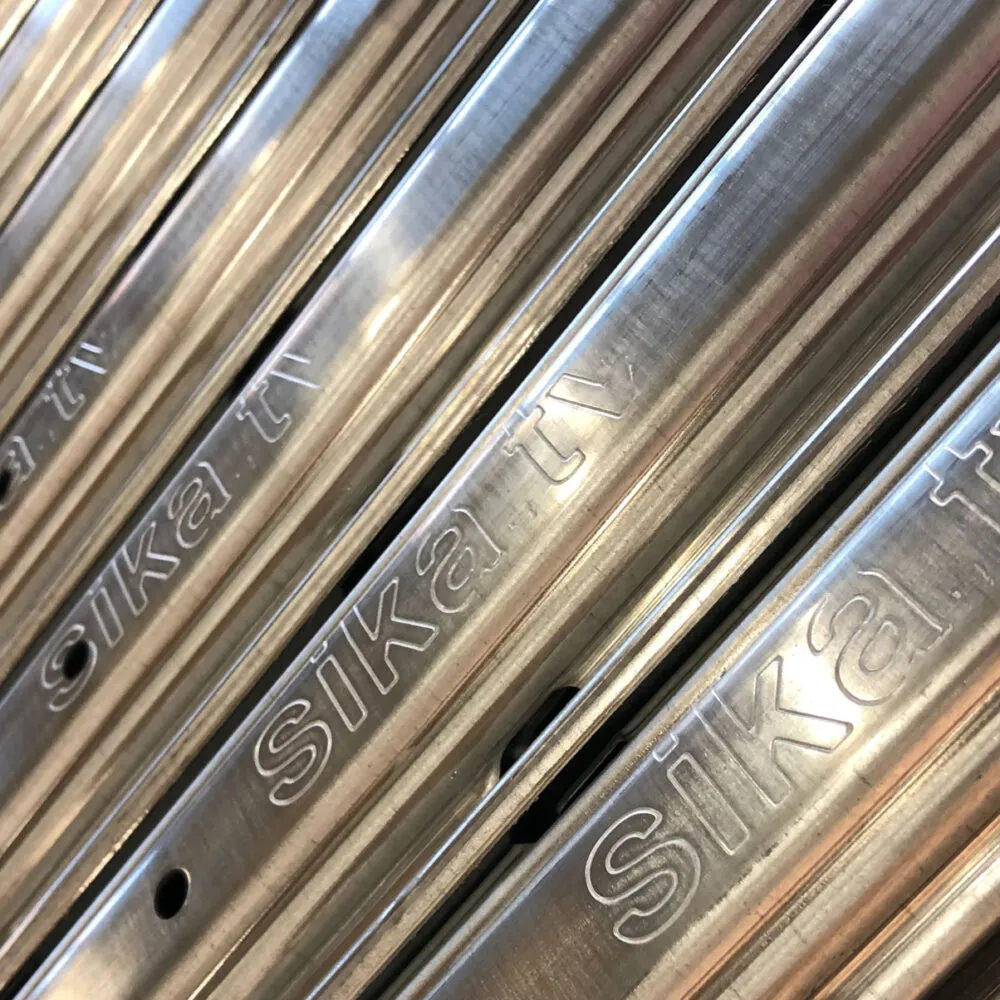
When no standard shape does the whole job, the answer is a custom section: a multi-bend profile that combines seats, stops, channels and stiffeners in one piece. Industrial door tracks, perforated racking uprights and many window and door profiles are custom sections.
The benefit is fewer operations and fewer assembly steps: one profile replaces two or three components and, with in-line punching, arrives already drilled and slotted. This is what our custom steel profiles to drawing are about.